La Plateforme Pédagogique Moodle de l'USTHB
-
Cette plate-forme est basée sur Moodle (Modular Object-Oriented Dynamic Learning Environment ), un environnement d'apprentissage
libre (Learning Management System ou LMS) qui permet de :
-
Mettre en ligne des ressources pédagogiques (texte, audio, vidéo, etc.)
-
Soutenir les interactions entre enseignants et étudiants, à l'aide d'une variété d'outils de communication, d'évaluation et de gestion.
-
Catégories de cours
Passer cours disponibles
Cours disponibles

Ce cours est dédié à l'étude de diffrents types d' antennes et des phénomènes de propagations des ondes électromagnétiques. Ce cours est destiné aux étudiants de licence de la faculté d'informatique niveau L2 option GTR. Il comprend l'étude des liasons de communications entre les différentes antennes, les ondes hertziennes et les ondes qui se propagaent au niveau du sol. et à travers la couche ionosphérique L'antenne élementaire ''dipôle " la base de compréhention du principe d'antenne elle sera notament développée et ce afin de comprendre les diagrammmes de rayonnement ainsi que les caractéristiques fondamentales des ondes.

The "Scientific English" S5 course (22.5 hours) for L3 students in Biotechnology and Health builds essential skills in reading, writing, and speaking English within scientific contexts such as biology, ecology, and laboratory work, targeting effective access to scientific literature and international academic exchanges. It develops competencies in analyzing scientific texts like IMRAD structures and abstracts, mastering thematic vocabulary on anatomy, cells, lab tools, and roots/prefixes, and practicing communication through emails, reports, presentations, and Q&A sessions. The course covers five chapters on foundational concepts, reading strategies, thematic content, and written/oral skills, supplemented by personal work such as exposés, culminating in a semester exam
- Enseignant: bechohra louiza bechohra louiza
- Enseignant: MARIA GROUSSEL

Le module de physique 2 est enseigné aux étudiants L1 SM-ST- ST.ing et MI. il permet de consolidé leurs connaissances en électricité et magnétisme conformément au programme national
- Enseignant: khemici mohammed wafik khemici

Description du cours :
Ce cours est une introduction à la statistique descriptive vise à fournir aux étudiants les outils et les concepts fondamentaux nécessaires pour analyser et interpréter des données. La statistique descriptive est une branche essentielle des statistiques qui se concentre sur la collecte, l'organisation, la présentation et l'analyse des données afin de résumer les informations de manière significative.
Public cible:
Ce cours est étudié pratiquement par tous les étudiants qui sont en premier cycle (1ère année ou 2ème année, formations : Licence ou ingénieurs) pour toutes les spécialités confond ues, telles que l'informatique, les mathématiques, le génie mécanique, le génie des procédés, le génie civil, l'économie, etc.
Objectifs du cours :
Comprehension des concepts fondamentaux : Les étudiants apprendront les notions de base de la statistique, y compris les types de données, les échantillons et les populations. Il est divisé en pleusieurs parties permettant une progression logique.
- Dr Gheliem Asma: agheliem gheliem asma
This course includes all the basics about water pollution and the treatment processes of wastewater.
- Enseignant: hbouanani bouanani hanane
In this course we will learn how to build a generative model that we can generate specific types of data,
this is -of course- depending on the data used for training
- Enseignant: Bberrabah BERRABAH Badri
Semestre :1
Public visé: Ce cours est destiné aux étudiants de troisième année licence Science et Technologie
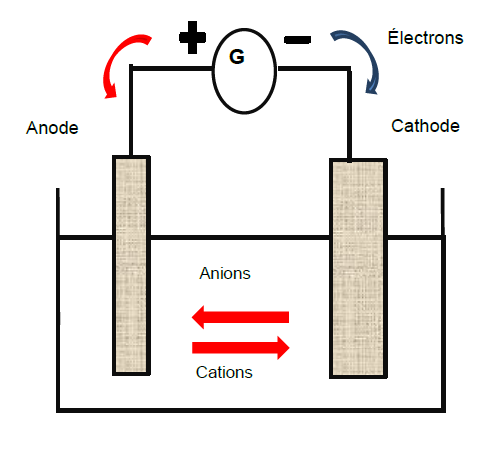
Objectif: Maitrise de la relation entre la transformation chimique et le passage du courant électrique.
Compétences visés: Comprendre les propriétés et les lois des électrolytes ,étudier les grandeurs physiques et leurs applications ,analyser les concepts thermodynamiques des réactions électrochimiques ,maîtriser le fonctionnement des systèmes électrochimiques
Plan du cours :
- Chapitre I : Rappels sur les solutions électrolytiques
- Chapitre II : Propriétés et grandeurs physiques des électrolytes
- Chapitre III : Thermodynamique des réactions électrochimiques
Ce cour est destiné aux étudiants en licence L3 Géologie ayant pour but de les familiariser aux méthodes de prospection géophysique.
- Enseignant: jugurtha KARICHE
For student 2nd year Bachelor's
- Enseignant: rchemlal chemlal radia